
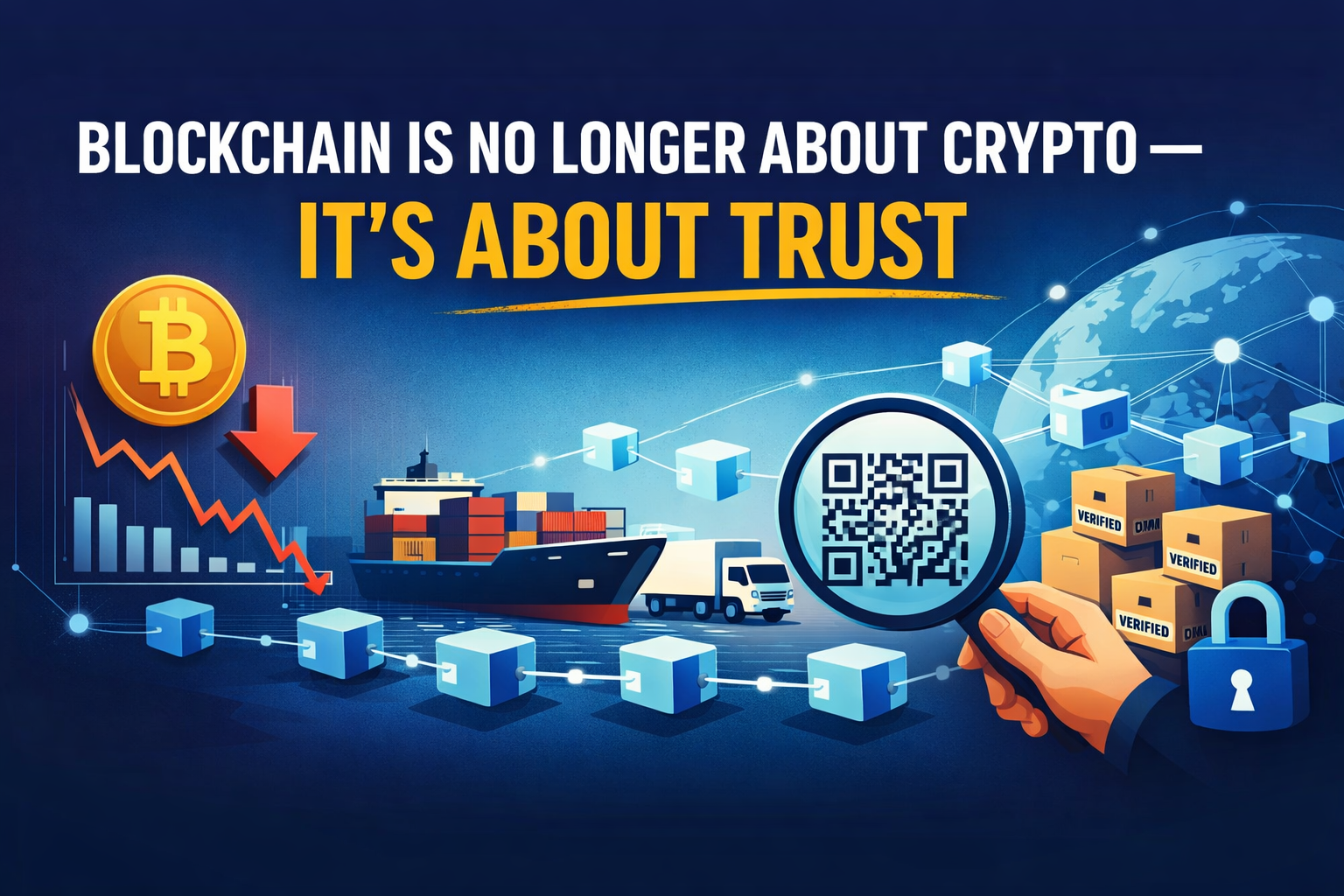
For years, blockchain was dismissed as a playground for cryptocurrency speculators. Bitcoin prices rose, collapsed, and rose again, while public confidence in the technology declined. Many believed blockchain would fade with the crypto hype. Instead, it has quietly moved into one of the most critical areas of the global economy: supply chains.
And this time, the impact is real.
Modern supply chains are deeply broken. A single product may cross multiple borders, pass through dozens of companies, and generate piles of documents. Yet most of this information remains scattered across emails, spreadsheets, and paper records. When something goes wrong — contaminated food, counterfeit medicine, or shipment delays — tracing the problem becomes slow, expensive, and often impossible.
Blockchain changes the rules by making data itself trustworthy. Every movement of goods is recorded permanently on a shared digital ledger that cannot be secretly altered. Once information is added, it stays there — visible, verifiable, and accountable. In a system long dependent on blind trust, blockchain introduces proof.
This is why global institutions are paying attention. The World Bank has adopted blockchain tools to improve transparency in development funding and procurement. United Nations agencies are experimenting with blockchain to track medical supplies and humanitarian aid. The Asian Development Bank is promoting it to reduce paperwork, speed up trade, and support small exporters. These are not tech experiments — they are solutions to systemic failures.
Speed is another decisive advantage. In traditional supply chains, tracing a defective product can take weeks. With blockchain, it can take minutes. In sectors like food and pharmaceuticals, those minutes can prevent crises. In business, they protect brands, revenues, and lives.
Fraud is where blockchain becomes truly disruptive. Counterfeit goods, fake documents, and illegal sourcing cost the global economy billions each year. Blockchain makes fraud harder by locking records permanently. A product verified at the source carries its history everywhere. Any attempt to manipulate that history leaves clear digital evidence.
Blockchain also automates trust through smart contracts. Payments can be released automatically once goods are delivered and verified — no delays, no disputes. For suppliers in developing countries, this means faster cash flow and reduced dependence on powerful intermediaries.
Still, blockchain is not a miracle cure. False data entered at the beginning remains false forever. Technology cannot replace governance, regulation, and institutional discipline. But it can expose weaknesses that were once hidden behind paperwork and excuses.
And that may be blockchain’s most uncomfortable strength.
As global trade becomes more fragile, demand for transparency is rising. Consumers want proof of origin. Regulators want verifiable compliance. Investors want data, not promises. Blockchain meets all three demands.
The real lesson is simple: blockchain did not fail — crypto distracted us. Now, as speculation fades, blockchain is finding its true purpose: becoming the infrastructure of trust in a global economy that can no longer afford opacity.