
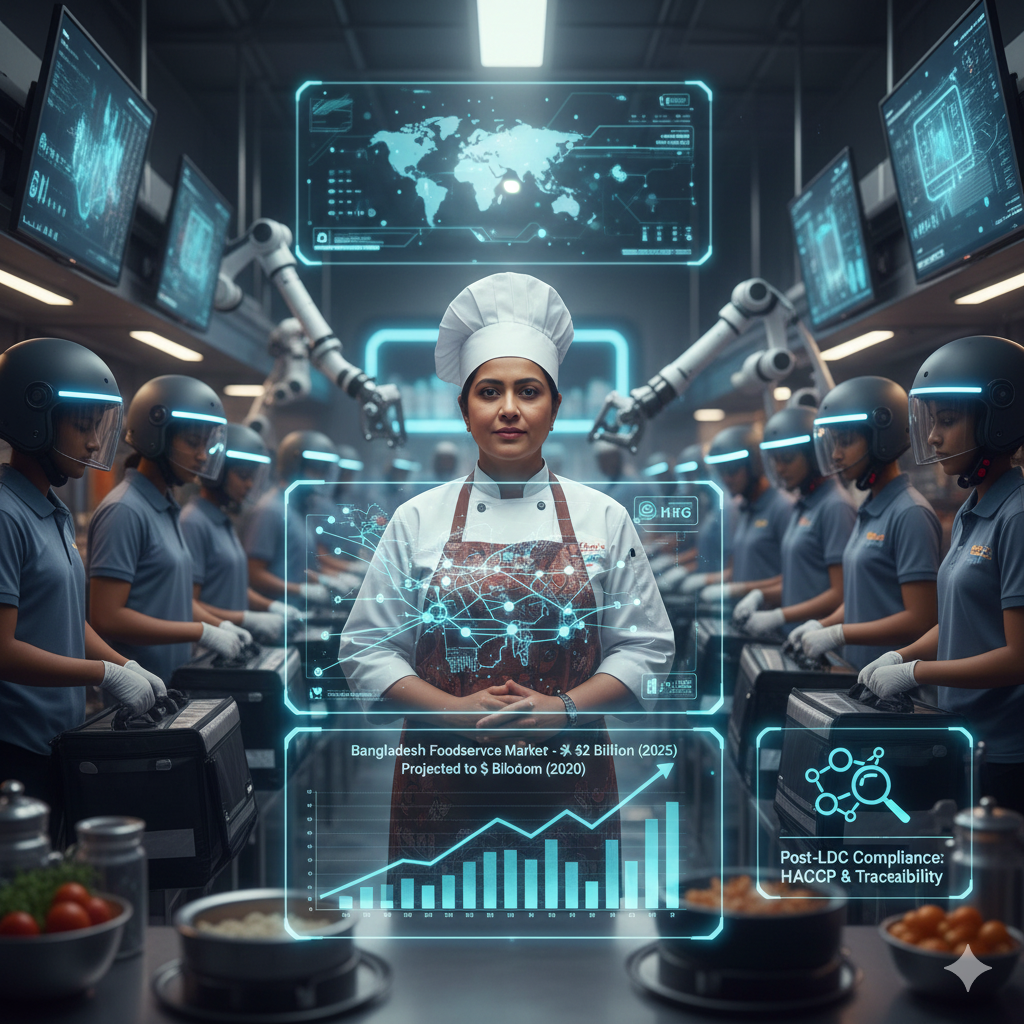
In the bustling streets of Dhaka and the scenic lanes of Sylhet, a quiet revolution is simmering—not in the halls of parliament, but in the kitchens of over 10,000 restaurants. Once a secondary sector, the culinary and restaurant industry of Bangladesh has matured into a cornerstone of urban lifestyle and a vital engine of the national economy.
As of 2026, the industry is no longer just about “eating out”; it is about identity, innovation, and a multibillion-dollar contribution to the GDP.
1. Market Overview: A $4.5 Billion Powerhouse
According to recent projections, the Bangladesh foodservice market is valued at approximately $4.32 billion in 2025, with estimates suggesting it will soar to over $8 billion by 2030. This rapid expansion is fueled by a 13.25% CAGR, outpacing many traditional sectors.
Key Drivers of Growth
- Rising Disposable Income: As the middle class expands, “dining as entertainment” has become a primary household expenditure.
- Urbanization: Over 8,000 restaurants now operate in Dhaka alone, catering to a workforce that increasingly relies on prepared meals.
- The “Mustafizur Row” Effect (Tourism): Despite regional cricketing tensions, domestic tourism has spiked, with travelers from Chittagong to Sylhet seeking “food tourism” experiences.
2. Economic Contribution: Beyond the Plate
The restaurant sector is a massive employment generator. Currently, it supports millions of jobs, ranging from high-end executive chefs to delivery riders.
- Employment: The industry acts as a primary entry point for the youth and migrant workers, providing over 12 million jobs when including the broader food supply chain (frozen foods and agro-processing).
- Agro-Processing Linkages: The industry is the largest buyer of local poultry, dairy, and produce. In 2026, the demand from restaurants is a primary reason why Bangladeshi food production is set to reach $27 billion.
- Tax Revenue: Through VAT and licensing fees, the industry provides a significant, albeit often under-realized, stream of domestic revenue for the government.
3. Emerging Prospects for 2026
The landscape is shifting from traditional sit-down eateries to high-tech, high-efficiency models.
A. The Cloud Kitchen Explosion
Cloud kitchens (delivery-only models) are the fastest-growing segment, projected to grow at 8.45% annually. Platforms like Foodpanda and Pathao Food have integrated AI to predict demand, allowing kitchens to operate with zero storefront costs.
B. Health-Conscious & Authentic Dining
2026 has seen a surge in “Healthy QSR” (Quick Service Restaurants). Consumers are moving away from oily “roadside” snacks toward branded, hygienically packaged, and nutrient-dense options. There is also a renewed pride in Indigenous Cuisines, with restaurants focusing on regional specialties like Chu Jhal from Khulna or Shatkora beef from Sylhet.
4. Current and Future Challenges
Despite the optimism, the industry faces a “triple burden” of challenges as Bangladesh moves toward LDC Graduation in late 2026.
- Supply Chain Volatility: Fluctuating prices of raw materials (oil, wheat, and meat) due to global market dynamics frequently squeeze profit margins.
- Skill Gap: While there are many workers, there is a severe shortage of skilled culinary professionals trained in global food safety standards (HACCP).
- Post-LDC Compliance: As Bangladesh graduates, the industry must adhere to stricter international hygiene and labor standards. Failure to do so could hurt the “Export Engine” of packaged and frozen foods, which is currently valued at $4.8 billion.
- Energy Costs: Rising electricity and gas prices are the #1 operational concern for restaurant owners in 2026, often leading to “hidden inflation” on menus.
5. Conclusion: The Way Forward
The culinary industry of Bangladesh is at a crossroads. To move from a $4 billion to an $8 billion industry, it must transition from “informal growth” to “institutional excellence.” This requires:
- Government Recognition: Treating the restaurant sector as a formal “Service Industry” with dedicated policy support.
- Investment in Vocational Training: Building more culinary institutes to feed the domestic and international demand for Bangladeshi chefs.
- Digital Integration: Moving beyond delivery apps into AI-driven inventory and waste management.
The story of Bangladesh’s food is the story of its people: resilient, diverse, and hungry for a better future.
References
- Mordor Intelligence (2025). Bangladesh Foodservice Market Size & Growth Report.
- ReportLinker (2026). Bangladesh Food Industry Outlook: Forecasts to 2026.
- CPD (2025). Packaged Food: Bangladesh’s Next Export Engine.
- World Bank (2025). Strong Reforms Needed to Sustain Inclusive Growth in Bangladesh.
- Research and Markets (2025). Bangladesh Foodservice – Market Share Analysis and Statistics.