
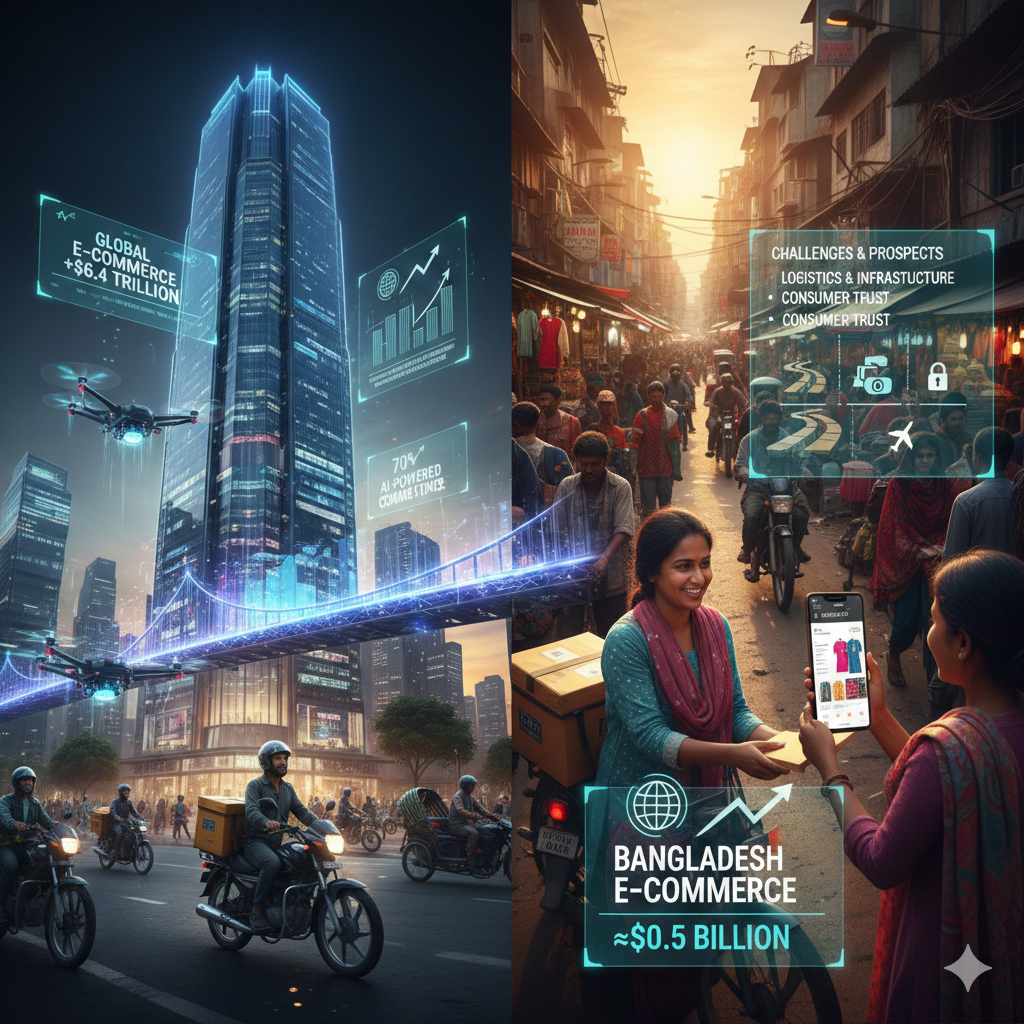
The landscape of modern commerce has undergone a seismic shift. What began as a niche convenience has evolved into the backbone of the global economy. As of 2026, e-commerce is no longer just an alternative to physical shopping; it is the primary engine of retail growth, redefining how billions of people interact with brands and products.
1. The Global Panorama: A Multi-Trillion Dollar Reality
On a global scale, e-commerce has reached staggering heights. Entering 2026, worldwide e-commerce sales have surpassed $6.4 trillion, with projections suggesting a climb toward $8 trillion by 2028. This growth is driven by several key factors:
- Mobile Dominance: Over 70% of digital transactions now occur via smartphones.
- AI Integration: From personalized product recommendations to automated customer service, Artificial Intelligence has optimized the shopping journey.
- The B2B Surge: While consumer shopping (B2C) gets the most headlines, the Business-to-Business (B2B) e-commerce market is actually larger, valued at over $32 trillion globally as companies digitize their entire supply chains.
2. The Bangladesh Context: An Emerging Digital Tiger
Bangladesh has emerged as one of the fastest-growing e-commerce markets in South Asia. Historically a cash-driven society, the nation has rapidly transitioned toward a digital-first mindset.
Current Market Size and Growth
In 2026, the Bangladesh e-commerce market is valued at approximately $10.5 billion. Experts predict a Compound Annual Growth Rate (CAGR) of around 17%, potentially reaching $15 billion by 2029. This boom is anchored by a massive youth population and a surge in mobile internet penetration, which now exceeds 130 million users.
The Rise of “F-Commerce”
A unique characteristic of the Bangladeshi market is the dominance of Facebook Commerce (F-commerce). Small and medium enterprises (SMEs) often bypass traditional websites, operating entirely through social media pages to reach a highly engaged local audience.
3. Why E-commerce Matters: The Importance
The significance of e-commerce extends far beyond simple “buying and selling.” It acts as a catalyst for broader economic development:
- Democratizing Business: It allows a small artisan in a rural village in Sylhet or Rajshahi to sell products directly to a customer in Dhaka or even abroad, bypassing traditional middlemen.
- Job Creation: The sector has birthed a massive logistics and delivery ecosystem, providing employment to hundreds of thousands of delivery riders, warehouse staff, and digital marketers.
- Economic Resilience: During global disruptions, e-commerce ensures that the supply chain remains active, providing essential goods when physical movement is restricted.
4. Challenges: The Hurdles on the Digital Highway
Despite the rapid ascent, several “roadblocks” persist, particularly in emerging markets like Bangladesh:
| Challenge | Impact |
|---|---|
| Logistics & Infrastructure | Delivery to remote areas remains slow and expensive due to poor road networks. |
| Consumer Trust | Scams and “product-mismatch” (getting a product different from the photo) remain a major deterrent for new users. |
| Payment Gateways | While Mobile Financial Services (MFS) like bKash and Nagad have helped, a large portion of the population still prefers Cash on Delivery (CoD). |
| Policy & Regulation | The lack of a comprehensive cross-border e-commerce policy limits local brands from selling easily in the international market. |
5. Future Prospects: The Road to 2030
The future of e-commerce is “Omnichannel”—the blurring of lines between online and offline. By the end of this decade, we expect to see:
- Hyper-Local Delivery: “Quick-commerce” models aiming for 10–30 minute delivery windows for groceries and essentials.
- Voice & Visual Search: Consumers using voice commands or photos to find products instantly.
- Cross-Border Expansion: As regulations catch up, “Made in Bangladesh” products—especially apparel and handicrafts—will likely find a robust digital pathway to global consumers.
Conclusion
E-commerce in 2026 stands at a pivotal junction. Globally, it is a mature giant; in Bangladesh, it is a rising force with untapped potential. For businesses, the choice is no longer whether to go digital, but how fast they can adapt. As infrastructure improves and trust is fortified through better consumer protection, the digital marketplace will become the primary heartbeat of the nation’s economy.
References:
- Shopify. (2025, September). Global Ecommerce Sales Growth Report (2026). Shopify Blog.
- International Trade Administration (ITA). (2025). eCommerce Sales & Size Forecast. trade.gov.
- Statista. (2026, January). Worldwide Retail E-commerce Sales 2014–2027. Statista Digital Market Insights.
- Flowlu. (2025, November). E-commerce Statistics 2026: Global, Mobile, Social, and B2B Data.