
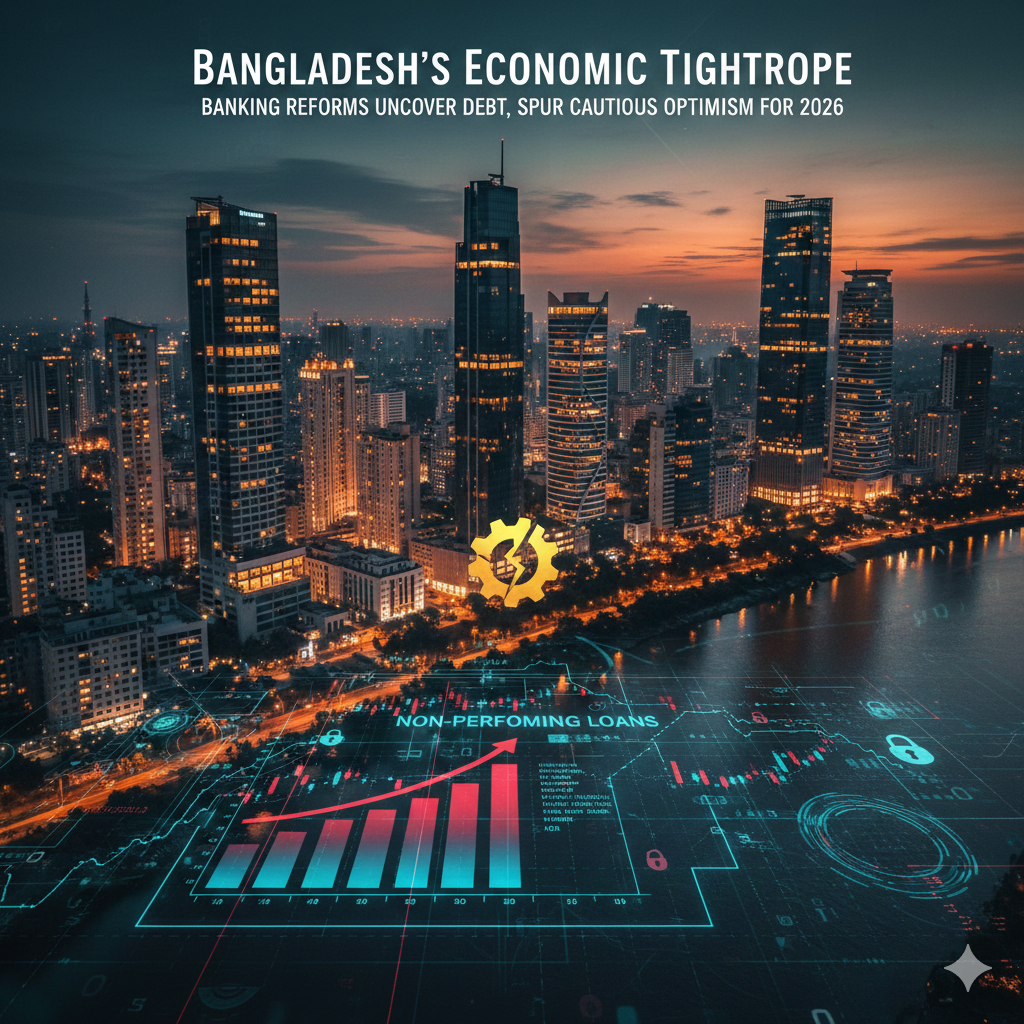
As of early 2026, Bangladesh’s economic landscape is a study in “cautious stabilization.” While the macroeconomy is beginning to show signs of resilience after a turbulent 2024 and 2025, the banking sector remains the most significant hurdle to a full recovery.
Here is an analysis of the performance of banks as of December 31, 2025, and the broader economic outlook for the country.
1. Banking Sector Performance (As of Dec 31, 2025)
The banking sector ended 2025 under heavy scrutiny. While some private commercial banks (PCBs) and foreign banks maintained healthy balance sheets, the industry as a whole faced a “systemic shock” due to transparency reforms and stricter classification rules.
- Non-Performing Loans (NPLs) at Record Highs: By late 2025, NPLs reached a historic peak. Total defaulted loans were reported to exceed Tk 6.4 trillion, accounting for nearly 35.7% of total outstanding credit. This surge was largely due to the central bank’s removal of “Hasina-era” lenient classification policies, revealing the true extent of bad debt.
- Liquidity Strain & The “Flight to Quality”: Liquidity remained tight throughout the year. However, a “flight to quality” was observed, where depositors moved funds from struggling Shariah-based and weak private banks toward more stable institutions like BRAC Bank, City Bank, and Eastern Bank.
- Capital Adequacy Challenges: With the rise in NPLs, many banks faced severe provision shortfalls, eroding their capital base. To counter this, Bangladesh Bank maintained a contractionary monetary policy, keeping the repo rate high (around 10%) to curb inflation and manage liquidity.
- Profitability Divergence:
- Top-Tier Banks: Maintained moderate profitability through foreign exchange gains and cautious lending.
- Struggling Banks: Faced operating losses as interest income was swallowed by the need for massive provisioning against bad loans.
2. Overall Economy of Bangladesh: 2026 Outlook
The broader economy is entering 2026 with a trajectory of slow but steady recovery. The interim government’s focus on institutional reform has started to yield results in macroeconomic stability.
Key Economic Indicators
| Indicator | Status/Forecast (FY26) | Trend |
|---|---|---|
| GDP Growth | 4.6% – 4.9% | Upward (from 4.1% in FY25) |
| Inflation | 7.1% – 8.7% | Gradually Easing |
| Forex Reserves | ~$20 – $21 Billion | Stabilizing |
| Remittance | Strong Growth | Positive |
- GDP Growth: The United Nations and IMF project growth to hover around 4.6% to 4.9% for the 2025-2026 fiscal year. While this is an improvement from the previous year, it remains below the pre-pandemic average of 6%+.
- Inflation Control: Inflation has been a persistent “pain point,” staying above 8% for much of late 2025. However, forecasts for 2026 suggest a decline toward 7.1% as supply chain disruptions ease and monetary tightening takes effect.
- Foreign Exchange & Trade: Foreign currency reserves have found a floor at approximately $20 billion, supported by strong remittance inflows and IMF loan tranches. However, the balance of payments remains sensitive to commodity price fluctuations.
3. Structural Challenges and Risks
Despite the stabilization, three major risks persist:
- Investment Stagnation: Private investment-to-GDP remains stuck at 22–23%. Many investors are waiting for the outcome of the national elections (expected in early 2026) before committing significant capital.
- Energy Shortages: Constraints in gas and electricity supply continue to hamper industrial production and export competitiveness.
- LDC Graduation: As Bangladesh prepares to graduate from Least Developed Country (LDC) status, the loss of duty-free market access is a looming concern that requires urgent trade policy reforms.
Summary
The performance of banks as of December 31, 2025, reflects a painful but necessary “cleansing” process where hidden defaults are finally being recognized. The overall economy is resilient, but sustainable growth in 2026 will depend on whether the government can translate macroeconomic stability into actual private sector investment and job creation.