
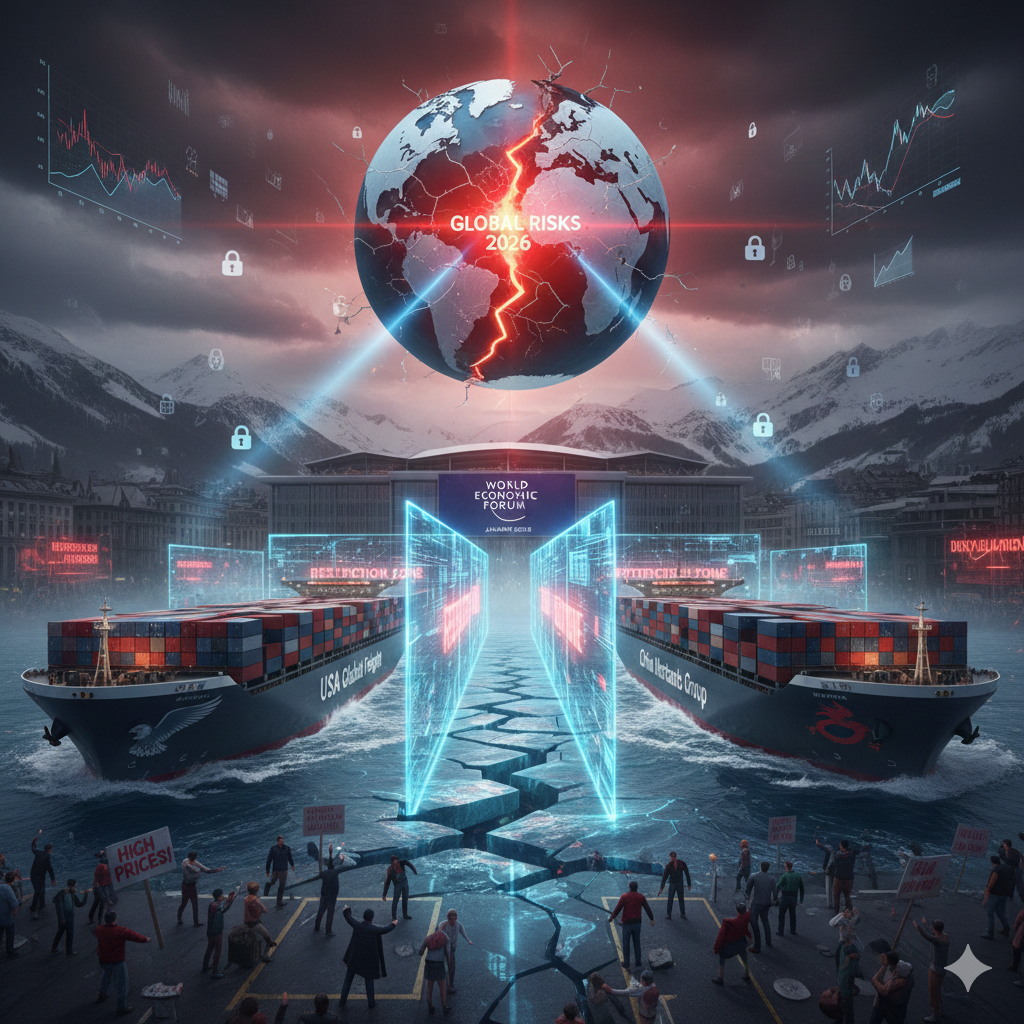
As we cross the threshold of 2026, the global landscape has undergone a profound transformation. The era of seamless globalization—once defined by the “interdependence is peace” mantra—has officially transitioned into what the World Economic Forum (WEF) now calls the “Age of Competition.” At the heart of this shift is geoeconomic confrontation, a phenomenon that has surged to become the #1 short-term risk to global stability. For knowledge seekers and global citizens, understanding this shift is not just an academic exercise; it is essential for navigating a world where trade, technology, and finance are no longer just tools for prosperity, but primary weapons of statecraft.
What is Geoeconomic Confrontation?
In previous decades, economic policy was largely designed to maximize efficiency and growth. In 2026, however, the script has flipped. Geoeconomic confrontation is the strategic use of economic instruments—tariffs, sanctions, export controls, and investment screenings—to achieve geopolitical ends.
Governments are no longer acting as mere referees in the marketplace; they are active combatants. The goal is no longer just “the best price,” but “strategic autonomy” and “security of supply.” This has led to the rise of “friend-shoring,” where nations prioritize trading with political allies, even if it means higher costs and lower efficiency.
The Drivers of Friction
Several key factors have accelerated this confrontation in January 2026:
- The Fracturing of Multilateralism: Institutions like the World Trade Organization (WTO) are struggling to mediate disputes as major powers increasingly opt for unilateral actions. The old rules-based order is being replaced by a transactional, “might-makes-right” approach to trade.
- The Technology Arms Race: From high-end semiconductors to AI and green energy minerals, technology is the front line. For example, the ongoing EU-China friction over electric vehicle (EV) subsidies and the US-led restrictions on quantum computing exports represent a broader battle for the technological “high ground.”
- Economic Nationalism: We are seeing a global adoption of “muscular economic interventionism.” This “New Economic Nationalism” means governments are providing massive subsidies to domestic industries (industrial policy) while penalizing foreign competitors.
Impact on the Global Economy: “Stagflation Light”
For the average observer, the most tangible result of this confrontation is economic volatility. Analysts are describing the current state of 2026 as “Stagflation Light.”
| Indicator | Status in Jan 2026 | Impact |
|---|---|---|
| Global Growth | Projected at 2.6% to 3.1% | A significant slowdown from the previous year. |
| Inflation | Stubbornly high (approx. 3.5%) | Driven by supply chain disruptions and trade barriers. |
| Insolvencies | Rising by 5% globally | Smaller businesses struggle to adapt to complex new regulations. |
The “efficiency dividend” of the last thirty years is disappearing. When countries stop trading with the cheapest producer and start trading with the “safest” one, prices inevitably rise. This creates a persistent inflationary pressure that central banks are finding difficult to suppress without triggering deeper recessions.
The Human Element: Polarization and Misinformation
Geoeconomic confrontation doesn’t just happen at shipping ports; it happens in our social fabric. The WEF’s 2026 report highlights a dangerous feedback loop between economic stress and societal polarization.
As cost-of-living crises worsen (as seen in recent protests in the Middle East and South America), populist movements often gain ground by blaming “foreign entities” or “global elites.” This fragmentation makes it even harder for nations to cooperate on existential threats that require global unity, such as climate change or pandemic prevention.
”The future is not a single, fixed path, but a range of decisions we make today. The Age of Competition compounds global risks, changing our collective capacity to address them.” — Global Risks Report 2026
Looking Ahead: Can We Cooperate in a Competitive Age?
As world leaders gather for the Davos Summit this month, the central question is whether “the spirit of dialogue” can survive in an atmosphere of deep-seated distrust. While competition is inevitable, “unrestrained” confrontation risks a full-scale economic war involving port blockades and capital controls.
For the knowledge seeker, the takeaway is clear: the 2026 global economy is being rewritten by the hand of geopolitics. Resilience, rather than just efficiency, is the new gold standard for nations and businesses alike.