
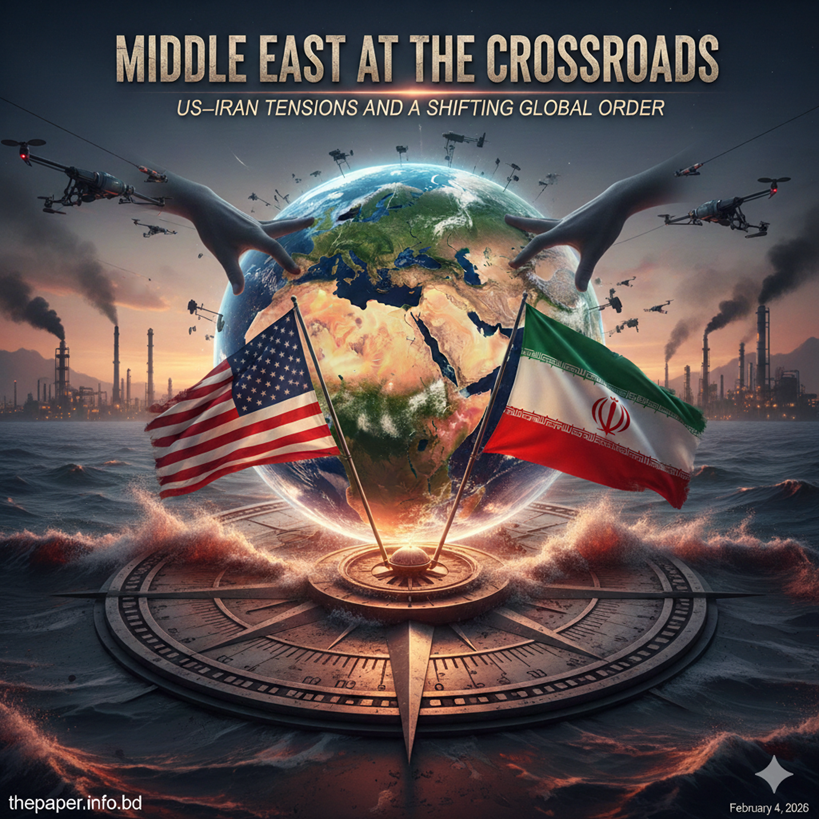
The Middle East has once again emerged as the focal point of global uncertainty. Escalating tensions between the United States and Iran, combined with wars in Ukraine and Gaza, have intensified fears of a wider regional conflict and revived debate over the future of global power. While talk of a third world war may be overstated, the current crisis clearly reflects a deeper transformation of the international order—one in which American dominance is increasingly contested and the influence of Russia and China continues to expand.
US–Iran Rivalry: Old Hostility, New Risks
The antagonism between Washington and Tehran stretches back to the 1979 Iranian Revolution and decades of sanctions, proxy wars, and failed diplomacy. In recent months, however, the rivalry has taken on renewed urgency. The United States has reinforced its military posture in the Middle East, citing concerns over Iran’s nuclear activities, attacks by Iran‑aligned groups on US interests, and threats to regional maritime security. Iran, in turn, views the American military buildup as a direct challenge to its sovereignty and regional role.
Iranian leaders have repeatedly warned that any direct US or Israeli strike would provoke a wider regional response. Such rhetoric comes at a time when the Middle East is already under strain from multiple conflicts, making the risk of miscalculation particularly high.
The Regional Domino Effect
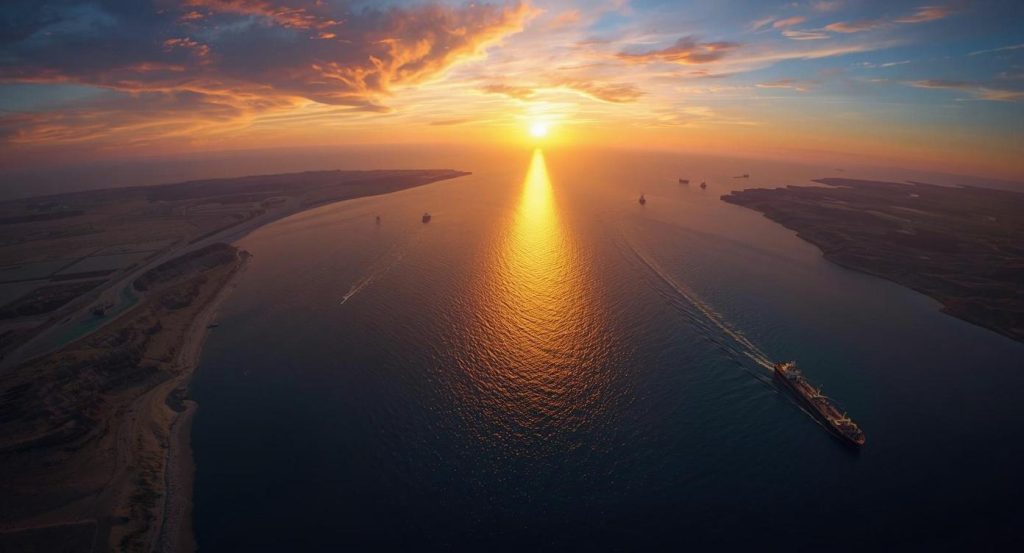
A direct confrontation between the United States and Iran would almost certainly extend beyond the two countries. Iran maintains influence across Iraq, Syria, Lebanon, and Yemen through allied political movements and armed groups. Any escalation could therefore spread rapidly across the region, drawing in multiple actors and destabilizing already fragile states.
The economic consequences would be global. The Strait of Hormuz, a narrow waterway between Iran and Oman, carries roughly 20 percent of the world’s traded oil, according to the US Energy Information Administration. Even limited disruption or heightened risk perceptions can cause sharp rises in oil prices, fueling inflation and economic stress worldwide—particularly for energy‑importing countries like Bangladesh.
| Maritime Route / Chokepoint | Oil Flow (mb/d) | Share of Global Seaborne Oil |
|---|---|---|
| Strait of Hormuz | 20.5 | ≈ 20% |
| Strait of Malacca | 16.0 | ≈ 15% |
| Bab el-Mandeb | 6.2 | ≈ 6% |
| Suez Canal & SUMED Pipeline | 7.5 | ≈ 7% |
| Bosphorus & Dardanelles | 2.4 | ≈ 2% |
| Panama Canal | 1.2 | ≈ 1% |
Global War: Fear Versus Reality
Public discussion often frames the US–Iran confrontation as a possible trigger for global war. While the risk of escalation is real, history suggests a more restrained outcome is likely. Since the end of the Cold War, major powers have avoided direct large‑scale war with one another, instead engaging through proxy conflicts, economic sanctions, cyber operations, and diplomatic pressure.
Today’s global economy is deeply interconnected. A full‑scale world war would disrupt supply chains, financial systems, and energy markets on a scale that no major power can afford. This interdependence acts as a powerful deterrent, even amid sharp geopolitical rivalry. The greater danger lies not in deliberate global war, but in accidental escalation driven by misjudgment or miscommunication.
Is the United States in Decline?
The current crisis has renewed debate over whether the United States is entering a period of decline. Political polarization at home, public fatigue with foreign interventions, and the challenge of managing multiple global crises have constrained Washington’s freedom of action. These pressures have made prolonged military engagement in the Middle East increasingly unpopular domestically.
Yet decline should not be mistaken for collapse. The United States still possesses unmatched military reach, the world’s most influential financial system, and a network of global alliances that no other power can replicate. Its challenge lies in adapting leadership to a more complex and competitive world rather than exercising unilateral dominance.
| Year | United States (%) | China (%) | Russia (%) |
|---|---|---|---|
| 2005 | 20.3 | 12.6 | 2.8 |
| 2007 | 20.1 | 13.8 | 3.0 |
| 2009 | 19.5 | 15.1 | 3.1 |
| 2011 | 19.1 | 16.8 | 3.3 |
| 2013 | 18.7 | 17.9 | 3.4 |
| 2015 | 18.4 | 18.5 | 3.2 |
| 2017 | 18.1 | 19.1 | 3.1 |
| 2019 | 17.6 | 19.8 | 3.0 |
| 2021 | 17.2 | 20.2 | 3.0 |
| 2023 | 16.8 | 20.6 | 3.1 |
| 2025 | 16.5 | 20.9 | 3.2 |
Line chart comparing share of global GDP (PPP) of the United States, China, and Russia over the past 20 years.
Russia and China in a Multipolar World
As US influence faces constraints, Russia and China are expanding their global roles in different ways. Russia has strengthened ties with Iran and positioned itself as a critic of US military intervention, using energy exports, arms sales, and diplomacy to maintain relevance on the global stage. However, its economic capacity remains far smaller than that of the United States or China.
China’s approach is more cautious and long‑term. As the world’s largest energy importer, Beijing prioritizes stability in the Middle East while expanding its influence through trade, infrastructure investment, and diplomacy. Rather than seeking confrontation, China aims to shape a multipolar order in which no single power dominates.
Conclusion
The current US–Iran tension is less a prelude to inevitable global war than a reflection of a world in transition. American power remains formidable, but it is increasingly challenged by shifting alliances and emerging centers of influence. Russia and China are not seeking a global war, but they are actively shaping a multipolar system where economic strength, diplomacy, and regional influence matter as much as military force.
For the global community—and especially for vulnerable economies—the priority must be de‑escalation, dialogue, and strategic restraint. In an interconnected world, the cost of conflict extends far beyond the battlefield, making cooperation not just desirable, but essential.
Key References
- US Energy Information Administration (EIA) – Strait of Hormuz oil flows
- World Bank – Global GDP (PPP) data
- Uppsala Conflict Data Program (UCDP)
- Al Jazeera, AP News, Reuters – US–Iran developments