
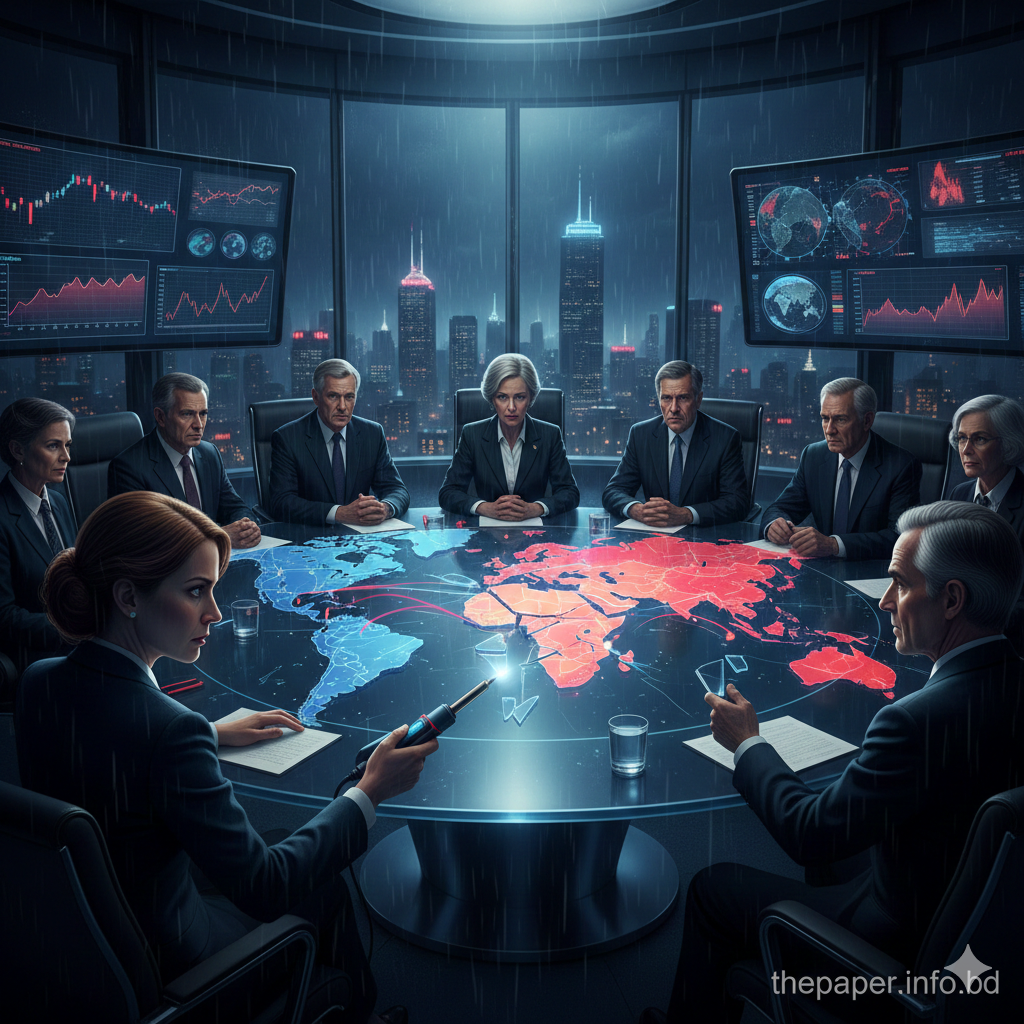
For generations, humanity clung to a comforting fable: that international dialogue would inevitably lead to lasting peace, that global institutions would preserve order, and that shared values would ultimately guide world leaders towards harmony. This narrative, a bedrock of post-Cold War optimism, has, by 2026, been decisively shattered. The comforting illusion is gone, replaced by a stark, unsettling truth: diplomacy today is less about forging peace and more about simply managing permanent chaos.
The Myth of De-escalation: When Talking Isn’t Trust
Just weeks ago, headlines buzzed with news that the United States and Russia had reopened vital military communication channels. For many, this signaled “de-escalation,” a hopeful return from the brink. Yet, the underlying reality is far more somber. After years marked by escalating proxy wars, crippling sanctions, and relentless moral posturing from both sides, this reopening was not a gesture of goodwill but an admission of profound failure. Both Washington and Moscow had realized a terrifying truth: they no longer genuinely understand each other’s “red lines.”
“We aren’t engaging in diplomacy because trust has been rebuilt; we’re doing it because mutual fear has reached a critical mass. It’s not about preventing conflict from starting; it’s about preventing a catastrophic mistake from escalating out of control.”
This is the new face of diplomacy—driven not by shared ideals or burgeoning trust, but by the cold, calculated logic of mutual assured destruction and the desperate need to avoid accidental global conflagration. The diplomatic toolkit has shifted from bridge-building to emergency braking.
Ukraine: A Permanent Pause Button
The conflict in Ukraine stands as the defining diplomatic failure of this decade. While “peace talks” continue to flicker on and off in various neutral capitals, genuine peace remains elusive. Each negotiation round appears less about reaching a compromise and more about managing appearances: reassuring nervous allies, calming volatile financial markets, and carefully curating domestic public opinion.
The Ukrainian Paradox: Diplomatic Function (2022 vs. 2026)
| Function Type | Early Conflict (2022) | Current State (2026) |
|---|---|---|
| Seeking Resolution | High | Low |
| Managing Optics | Moderate | High |
| Preventing Escalation | High | Very High |
| Humanitarian Access | High | Moderate |
| Building Trust | Low | Very Low |
| Managing Fatigue | Low | High |
Here, diplomacy is no longer a path to reconciliation. Instead, it functions as a “pause button” on an unending conflict—a necessary mechanism to allow exhausted parties to regroup, resupply, and prepare for the next phase of fighting, rather than genuinely seeking an end. The conflict may freeze, but it does not resolve.
The Quiet Rebellion: The Rise of Strategic Non-Alignment
Perhaps the most profound, yet often overlooked, shift in the global diplomatic landscape is the quiet rebellion of a growing cohort of “middle powers.” These nations are not simply shifting allegiance from West to East; they are fundamentally rejecting dependence on any single hegemon.
They have absorbed a series of harsh, undeniable lessons:
- Alliances can drag you into wars you never chose.
- Sanctions can boomerang, crippling your own economy.
- Moral rhetoric from superpowers rarely translates into protection for your national interests.
Consequently, these states have embraced a strategy of “hedging.” They diversify their trade partners, military suppliers, and even their currency reserves. They cultivate relationships with all major blocs while committing fully to none. This isn’t cowardice; it’s rational survival in a world where loyalty has become a liability. They seek maximum optionality and minimum entanglement.
BRICS: Autonomy, Not Hegemony
The BRICS bloc, frequently a target of Western skepticism, continues its quiet expansion and growing influence. Its appeal, however, is often misunderstood. Many developing and middle-income nations are not looking for a new global leader to replace the old ones; they are searching for a world with less interference from any power.
While the West continues to speak the language of “global leadership” and “shared democratic values,” much of the rest of the world increasingly speaks the pragmatic language of “autonomy,” “sovereignty,” and “non-interference.” The BRICS expansion, including the recent additions of Saudi Arabia, Iran, Egypt, Ethiopia, and the UAE, signifies a profound desire for multipolarity and alternative economic structures that exist outside the direct influence of traditional Western institutions.
This movement is less about replacing one hegemon with another and more about carving out a space where nations can pursue their own interests without being forced to choose sides in great power rivalries.
📈 Global Diplomatic Trust Index (2016-2026)
| Year | Average Global Trust Index | Notable Events |
|---|---|---|
| 2016 | 56 | Post-Paris Agreement optimism |
| 2018 | 59 | Peak “Global Stability” period |
| 2020 | 54 | COVID-19 pandemic onset |
| 2022 | 50 | Invasion of Ukraine; rising inflation |
| 2024 | 48 | Record elections; misinformation peaks |
| 2026 | 45 | Transition from “Grievance” to “Insularity” |
Diplomacy in the Age of Permanent Crisis
The most uncomfortable truth confronting diplomacy in 2026 is its embrace of permanent conflict. Wars are expected to freeze into protracted stalemates rather than truly end. Sanctions regimes may soften or adapt, but they rarely disappear entirely. Geopolitical rivalries are managed for stability, not genuinely resolved.
This isn’t merely a failing of individual diplomats. It is the natural consequence of a world characterized by fragmented power, severely weakened international institutions, and a global trust deficit that appears insurmountable. The hope for a linear progression towards an ever-more peaceful world has given way to the stark reality of cyclical crises.
The Hard Question No One Wants to Ask
If diplomacy no longer guarantees peace, what is its fundamental purpose? The answer, while unsettling, is bracingly honest: its purpose is to delay outright collapse, to manage the intensity of violence, and to prevent accidental, catastrophic mistakes from spiraling out of control. It is not about building harmony; it is about preventing the worst.
In 2026, diplomacy is the essential, yet often unglamorous, guardrail on a crumbling cliff. It won’t fix the road, and it certainly won’t stop the tectonic shifts beneath, but it might just keep the world from plunging into the abyss. It’s a grim but vital job in a world that has finally shed its illusions.