
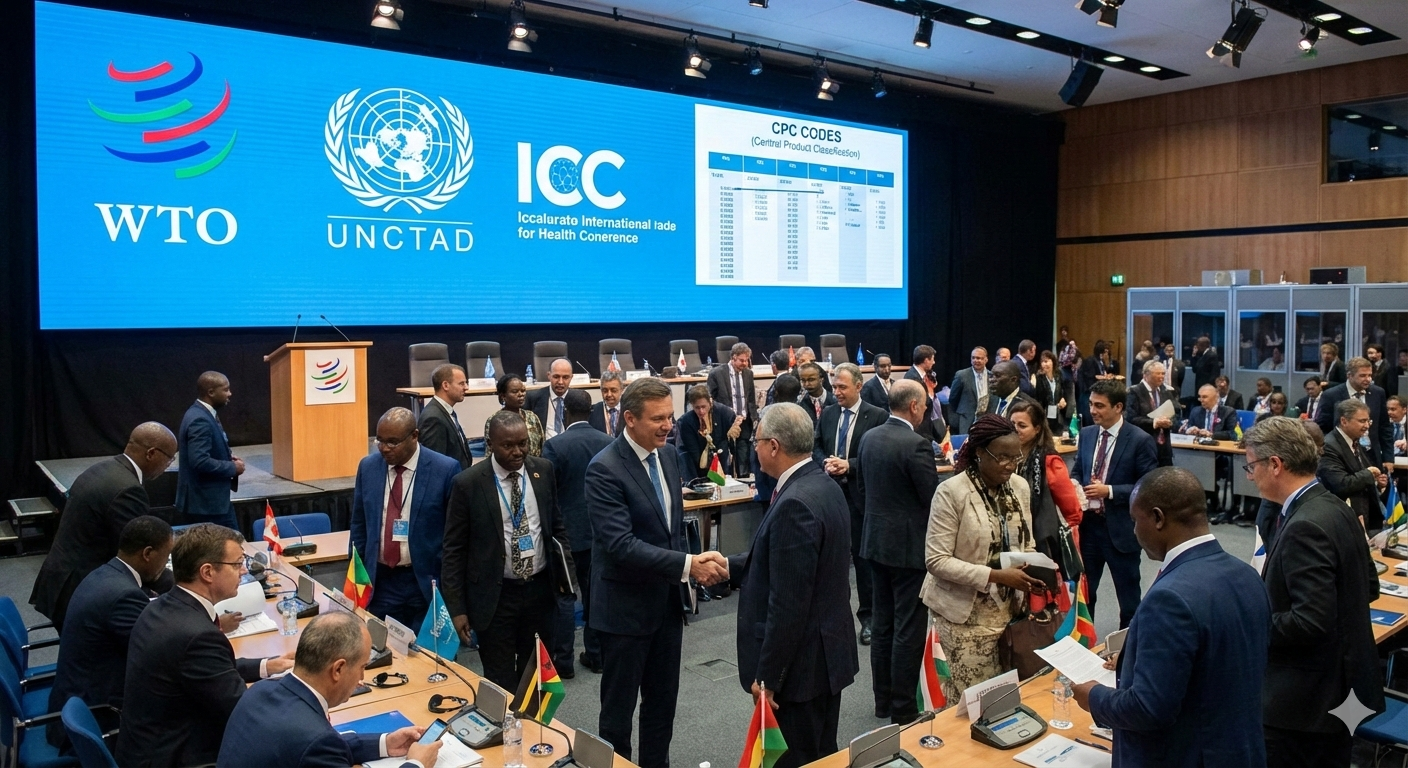
In the modern era, global trade is not merely the exchange of goods and services across borders; it is a highly sophisticated, synchronized performance governed by a complex web of international organizations and standardized systems. These “bodies of trade” provide the legal, technical, and diplomatic infrastructure necessary to prevent global commerce from descending into a series of trade wars and logistical bottlenecks.
From the high-level policy negotiations of the World Trade Organization (WTO) to the technical granularity of the Central Product Classification (CPC) systems, these entities ensure that a laptop manufactured in Taiwan can be seamlessly sold in Germany, with both nations agreeing on its classification, tax status, and safety standards.
1. The World Trade Organization (WTO): The Rule-Maker
At the summit of international trade stands the World Trade Organization (WTO). Established in 1995 as the successor to the General Agreement on Tariffs and Trade (GATT), the WTO is the only global international organization dealing with the rules of trade between nations. According to the World Trade Report 2024, the organization now manages over 98% of global trade flows.
Key Functions and Modern Challenges:
- Trade Negotiations: The WTO acts as a forum where member governments negotiate the reduction of trade barriers.
- Dispute Settlement: Perhaps its most critical role, the WTO operates a legal mechanism to resolve trade conflicts. If a country believes another member is violating trade agreements, it can bring the case to the WTO for adjudication.
- The Mediation Alternative: In recent years, the WTO’s Appellate Body has faced a vacancy crisis, leading many scholars to suggest that mediation should act as a vital supplement to the traditional litigation process to maintain stability (Lee, 2024).
The fundamental principles of the WTO—Non-discrimination (the “Most-Favored-Nation” principle) and Reciprocity—ensure that trade remains fair and that large economies cannot easily bully smaller ones through arbitrary tariffs.
2. Technical Classification Systems: The Role of the CPC
While organizations like the WTO handle the “politics” of trade, technical bodies handle the “vocabulary.” This is where the Central Product Classification (CPC) comes into play. Maintained by the United Nations Statistical Division, the CPC is a comprehensive classification system that categorizes all goods and services.
The Hierarchy of Classification:
The CPC is unique because of its five-level hierarchical structure, which allows for extreme precision in economic data:
- Sections (e.g., Section 6: Distributive trade services)
- Divisions
- Groups
- Classes
- Subclasses
This granular detail is essential for the General Agreement on Trade in Services (GATS). Because services (like banking or consulting) are intangible, they cannot be measured by weight or volume. The CPC provides the numerical codes that allow countries to define exactly which service sectors they are opening to foreign competition (United Nations Statistics Division, 2015).
3. The Facilitators: UNCTAD and the ITC
While the WTO sets the rules, other bodies focus on the capacity of nations to participate in trade.
UNCTAD (United Nations Conference on Trade and Development)
UNCTAD serves as the voice of developing nations. Its primary goal is to ensure that international trade contributes to sustainable development. In its Trade and Development Report 2024, UNCTAD emphasized the need for “creative economy” growth, helping developing nations move beyond exporting raw materials into high-value digital and cultural products (UNCTAD, 2024).
ITC (International Trade Centre)
The ITC is a joint agency of the WTO and the United Nations. Its mission is “boots on the ground,” working directly with Small and Medium Enterprises (SMEs). For instance, if a coffee cooperative in Ethiopia wants to export to Europe, the ITC provides the market intelligence and training on quality standards required to compete in the global market.
4. The World Customs Organization (WCO) and the HS System
If the WTO is the brain of international trade, the World Customs Organization (WCO) is the hands. The WCO manages the Harmonized System (HS), a nomenclature used by more than 200 countries to identify products at the border.
HS vs. CPC: What is the Difference?
While the CPC is used primarily for statistical analysis and services, the HS codes are the “law of the land” at customs checkpoints. These codes determine the exact tariff rate applied to a physical product. As global priorities shift, the WCO has begun exploring how to amend HS codes to better track environmentally harmful products, such as specific types of plastic waste, to aid in global pollution control (Vaca Eyzaguirre & Deere Birkbeck, 2022).
5. Private Sector Governance: The ICC
Not all trade bodies are governmental. The International Chamber of Commerce (ICC) represents millions of companies globally. Their most significant contribution is Incoterms® (International Commercial Terms). These codes (like “FOB” for Free on Board) are the universal language of trade contracts, defining exactly when the responsibility for goods shifts from the seller to the buyer (International Chamber of Commerce, 2020).
6. Emerging Frontiers: Digital and Green Trade
As we enter 2025 and 2026, the framework of international trade is undergoing its most significant transformation since the 1990s.
The Digital Shift
The rise of e-commerce has outpaced traditional rules. In July 2024, eighty WTO member countries reached a consensus on a “stabilized text” for global e-commerce rules, addressing issues like electronic signatures and the prohibition of customs duties on electronic transmissions (Banerjee et al., 2024).
Green Trade and CBAM
Environmental sustainability is no longer a peripheral issue. The introduction of the Carbon Border Adjustment Mechanism (CBAM) by the European Union and similar “green finance” trends in China are forcing trade bodies to reconsider how they tax products based on their carbon footprint (Yue & Nedopil, 2025). This marks a shift from trade based purely on price to trade based on environmental impact.
Conclusion
The machinery of international trade is a delicate balance of law, diplomacy, and technical data. The “bodies of trade”—from the rule-making WTO and the classifying CPC to the facilitating ITC and the standard-setting ICC—form a comprehensive ecosystem. They provide the stability that allows businesses to invest across borders and consumers to enjoy products from every corner of the globe.
As the world shifts toward digital economies and greener supply chains, these organizations will remain the essential architects, constantly updating the blueprints of global commerce to ensure that trade remains a vehicle for prosperity and peace.
References
Institutional Sources
- International Chamber of Commerce. (2020). Incoterms® 2020: ICC rules for the use of domestic and international trade terms. ICC Publication No. 723E.
- United Nations Conference on Trade and Development (UNCTAD). (2024). Creative economy outlook 2024. United Nations Publications. https://unctad.org
- United Nations Statistics Division. (2015). Central product classification (CPC) version 2.1. Statistical Papers (Series M), No. 77. United Nations.
- World Customs Organization. (2022). What is the harmonized system (HS)? WCO Nomenclature Department. https://www.wcoomd.org
- World Trade Organization. (2024). World trade report 2024: Trade and technology. WTO Secretariat.
Academic & Technical Research
- Banerjee, P., Mukherjee, A., & Srishti, A. (2024). E-commerce in trade agreements: India’s strategies and options. ARTNeT Working Paper Series, No. 244. United Nations ESCAP.
- Lee, J. (2024). Long-term relationship over litigation: Mediation in WTO dispute settlement proceedings. World Trade Review, 24(1), 50–74. https://doi.org/10.1017/s1474745624000417
- Vaca Eyzaguirre, C., & Deere Birkbeck, C. (2022). Plastic pollution and trade: Options for amending the harmonized system. TESS Policy Brief. Graduate Institute of International and Development Studies.
- Yue, M., & Nedopil, C. (2025). China green finance status and trends 2024-2025. Griffith Asia Institute. https://doi.org/10.25904/1912/5786