

For bankers, contractors, and policymakers in Bangladesh’s booming development sector, Work Order Finance (WOF) is the indispensable engine driving infrastructure from blueprint to reality. This specialized financing bridges the critical gap between winning a project and receiving payment, enabling the execution of public and private developmental works. This guide examines the established mechanics of WOF in Bangladesh and maps its alignment with evolving global standards for trade and sustainable finance.
Part 1: The Local Mechanism in Bangladesh
In Bangladesh, WOF is a structured package of both funded (cash) and non-funded (guarantee) facilities offered to contractors. The system is tailored to the procurement cycles of government and large corporate projects.
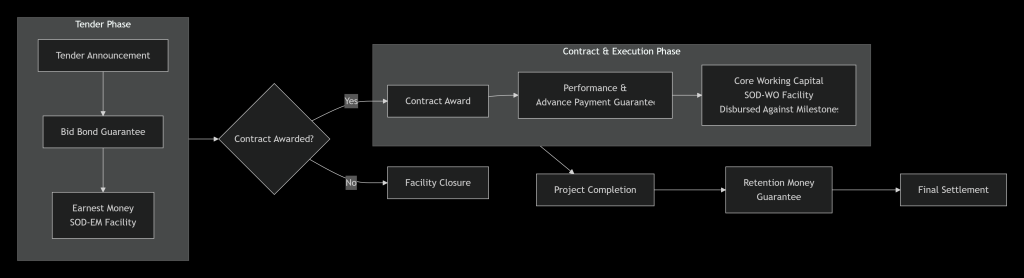
The financing journey aligns with the project lifecycle, as shown below:
The Funding Breakdown
A typical WOF package comprises several key instruments. The primary funded facility is the Secured Overdraft (Work Order) or SOD(WO), which provides the revolving working capital. This is supported by a suite of bank guarantees at different stages.
The typical structure of a Work Order Finance facility is shown below:
| Facility Type | Instrument | Primary Purpose | Stage of Use |
|---|---|---|---|
| Non-Funded (Guarantee) | Bid Bond Guarantee | Guarantee of serious bid participation | Tender / Bid |
| Funded | SOD for Earnest Money | Cash for the earnest money deposit | Tender / Bid |
| Non-Funded (Guarantee) | Performance Guarantee (PG) | Assurance of project completion | Contract Award |
| Non-Funded (Guarantee) | Advance Payment Guarantee (APG) | Enables release of upfront mobilization funds | Contract Award |
| Funded | Secured Overdraft (Work Order) – SOD(WO) | Core working capital for project execution | Project Execution |
| Non-Funded (Guarantee) | Retention Money Guarantee | Releases final withheld payments | Project Completion |
Despite its critical role, the system faces challenges identified by local practitioners, including complex regulations, payment delays from authorities, and collateral valuation difficulties. Banks mitigate risk through layered security: assigning bill receivables, taking corporate/personal guarantees, and securing fixed deposits.
Part 2: The Global Framework for Convergence
Globally, WOF is part of broader trade and supply chain finance, governed by frameworks that ensure consistency and manage risk.
1. Universal Rules for Guarantees
The International Chamber of Commerce (ICC) Uniform Rules for Demand Guarantees (URDG 758) are the global standard. These rules, adopted by entities like the World Bank, create a predictable framework for all parties involved in guarantees like PGs and APGs.
2. Standardizing the Financial Language
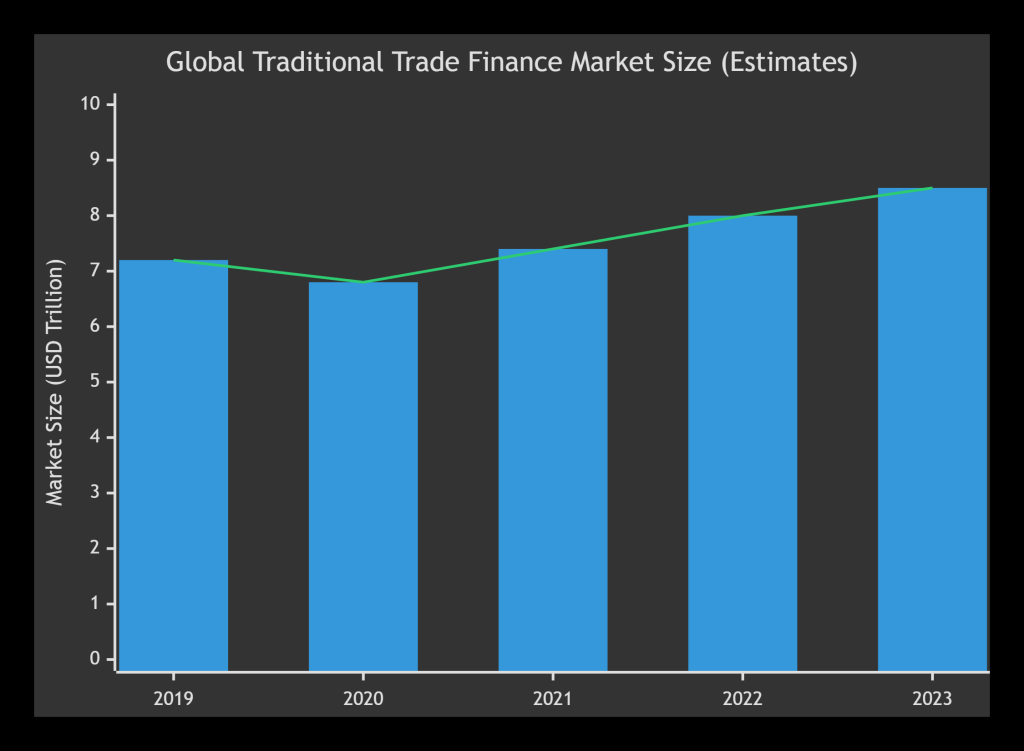
A key global challenge is inconsistent terminology. The ICC Standard Definitions for Techniques of Supply Chain Finance provides a common lexicon for financiers and regulators, which is crucial as global supply chain finance volumes are significant.
The market size underscores the need for such standards:
3. The New Imperative: Sustainable Trade Finance
The integration of Environmental, Social, and Governance (ESG) factors is the most significant evolution. The ICC Principles for Sustainable Trade and Trade Finance provide a framework to assess transactions against the UN Sustainable Development Goals and prevent “greenwashing.”
Part 3: Strategic Roadmap for Bangladeshi Banks
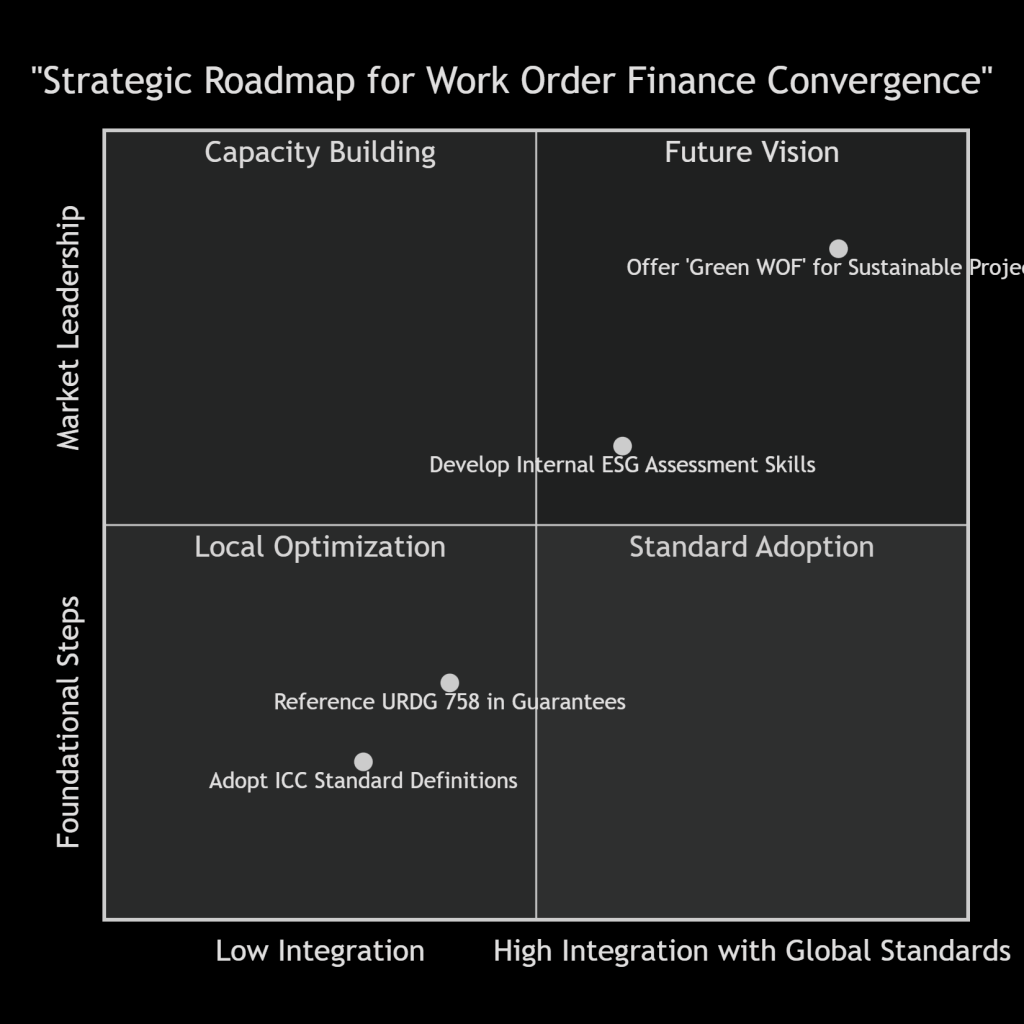
The future lies in aligning local practice with global frameworks. The strategic roadmap involves adopting standards and building new capacities.
The path forward involves foundational, strategic, and market-leading steps:
Immediate Steps (Standard Adoption):
- Adopt Standard Terminology: Use the ICC’s global definitions to reduce ambiguity.
- Reference ICC Rules: Incorporate URDG 758 into guarantee documents.
Medium-Term Goals (Capacity Building):
- Develop ESG Capacity: Train credit teams to evaluate projects using ICC Sustainability Principles.
Long-Term Vision (Market Leadership):
- Launch Green WOF Products: Create dedicated financial products for projects with verified positive environmental and social impact, attracting international ESG-focused capital.
Conclusion
Work Order Finance is a proven catalyst for Bangladesh’s development. By mastering its local mechanics and proactively integrating global standards—particularly in sustainability—banks can do more than finance projects. They can enhance efficiency, access new capital, and position themselves as architects of a resilient and sustainable economy. The convergence of local need and global practice is not just an opportunity; it is the future of development finance.
References
- Standard Bank Bangladesh PLC. “Work Order Finance.”
- Shamsudduha Toha. “Work Order Financing System and Barriers in Banking: A Bangladeshi Perspective.” LinkedIn.
- Mercantile Bank Limited. “Funded Credit Facilities.”
- International Chamber of Commerce (ICC). “ICC Demand Guarantee Rules URDG 758.”
- International Chamber of Commerce (ICC). “Standard Definitions for Techniques of Supply Chain Finance.”
- International Chamber of Commerce (ICC). “ICC Principles for Sustainable Trade and Sustainable Trade Finance.”
- Trade Finance Training. “ICC Principles for Sustainable Trade – Wave 3.”